 SLAM HISTORY
ALL TIME Cincinnati VENUES
Cincinnati Tennis Club, East Walnut Hills: 1969-1971
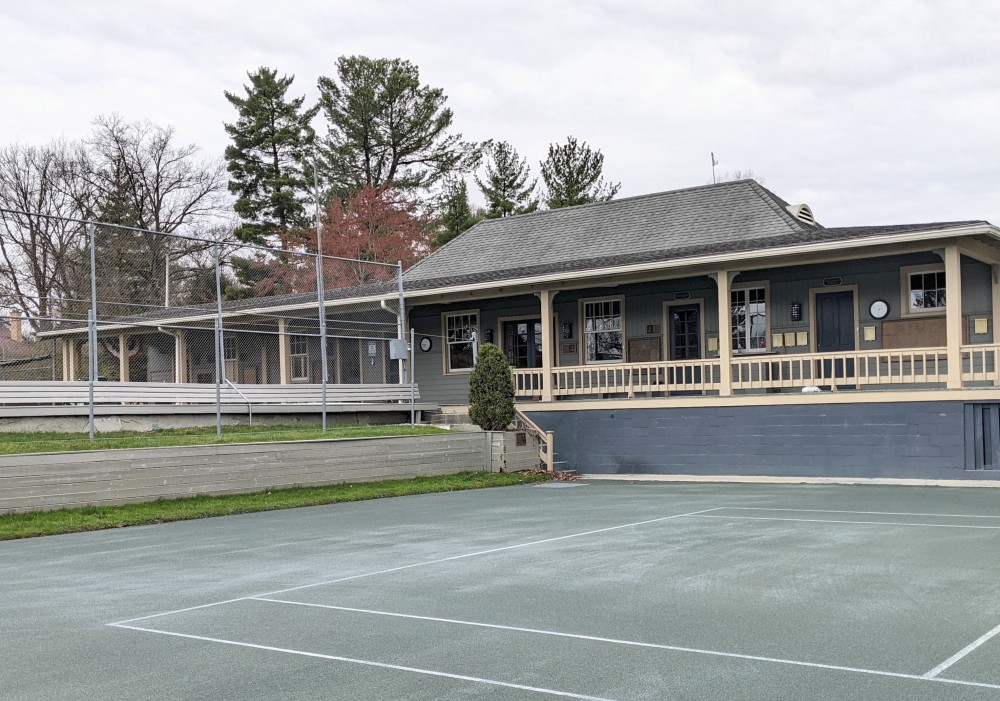
The Open Era tournament arrived in Cincinnati after a year's delay, with the name changed from the Tri-State Tennis Tournament to the Western Tennis Championships. Furthermore, the tournament was rescheduled for late July to avoid clashing with Wimbledon. The competition was held on the clay grounds of the Cincinnati Tennis Club. The club has a long history dating back to 1880 and is among the ten oldest tennis clubs in the United States. The inaugural champions were Cliff RICHEY and Lesley TURNER.
Queen City Racquet Club, the Sharonville suburb of Cincinnati, Ohio: 1972-1973
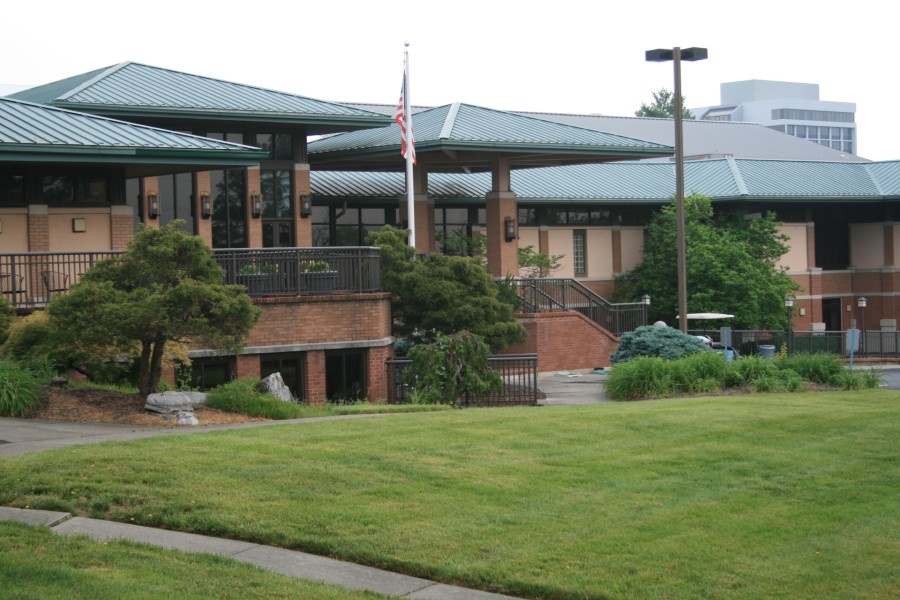
In 1972, the tournament moved to the new Queen City Racquet Club in the suburb of Sharonville for two years. The new tennis complex, built in 1971, featured facilities that enabled night matches for the first time in the tournament's history. 1973 was not only the tournament's final year at the Queen City Racquet Club. The tournament's survival was threatened by the financial difficulties that had plagued the organizers in recent years. A further blow came with the retirement of its main sponsor, Robert Harpenau, who moved to Florida.
Cincinnati Convention Center: 1974
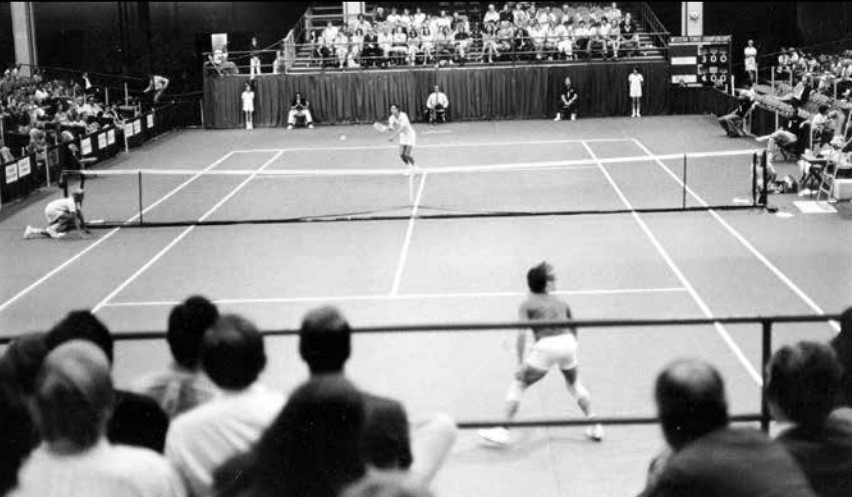
In 1974, the tournament faced several challenges. The new women's World Team Tennis season was underway at the same time, forcing organizers to cancel the women's competition. Another problem was the Louisville tournament, which had a prize fund three times that of the Cincinnati tournament and was held the same week. Only by equalizing the prize money for the men's singles winner were the tournament officials able to save it. For the first and only time, the tournament was held on indoor carpet courts at the Cincinnati Convention Center downtown during the daytime to attract visitors during their lunchtime.
Tennis Club, Coney Island Amusement Park: 1975-1978
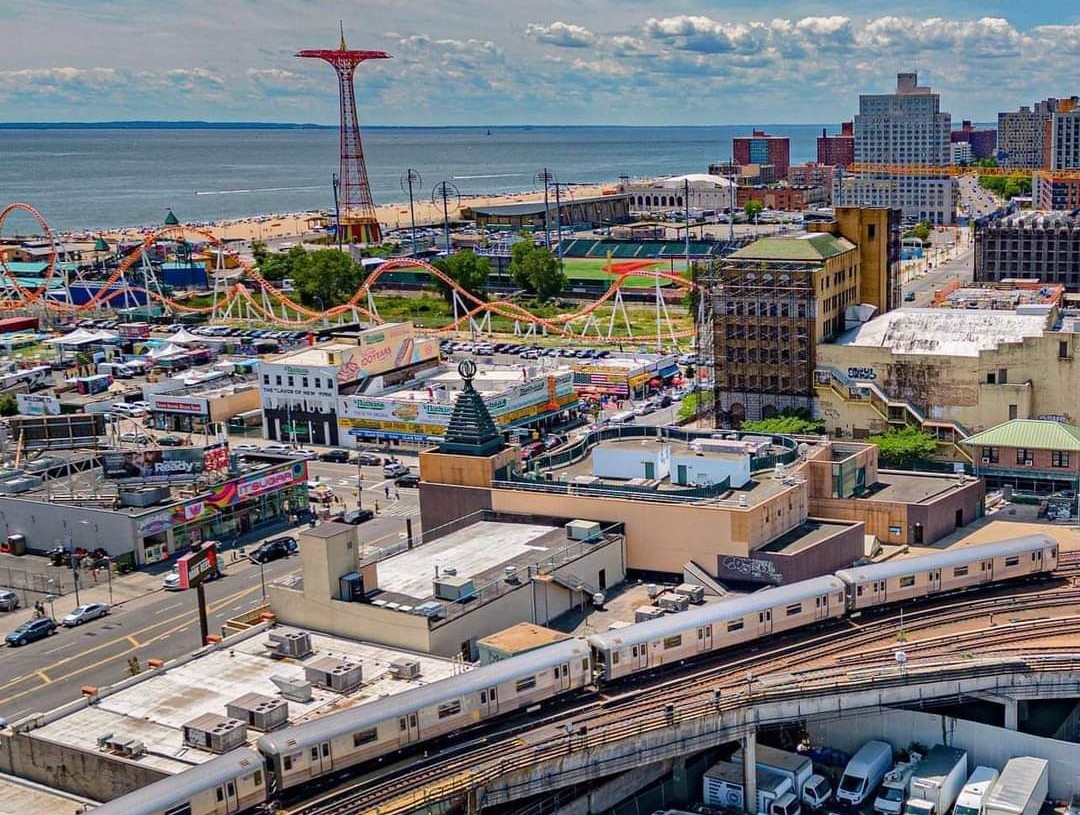
In 1975, the tournament moved to the purpose-built hard courts of the Sunlite Swim and Tennis Club in Old Coney on the Ohio River. However, the following year, additional clay courts were built, and tennis players competed on the tournament's traditional surface. Paul Flory, the head of Procter & Gamble and the new tournament director, had enticed new sponsors to ensure the tournament's future financial competitiveness.
The Lindner Family Tennis Center, Mason, Ohio: 1979 - present
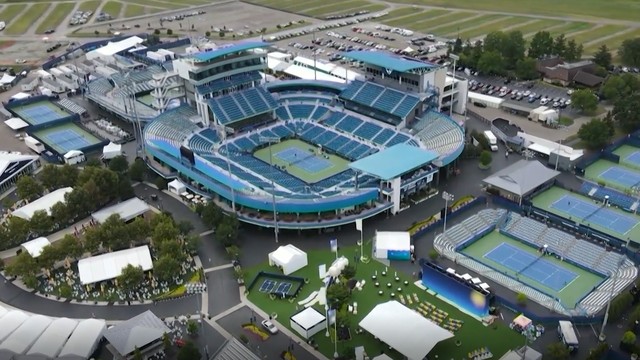
In 1979, the tournament moved from its flood-prone Old Coney facility to the new Lindner Family Tennis Center in Mason, a suburb 25 miles north of downtown Cincinnati. The first competition was held at a court with temporary stands and seating. The stands were the same as those used at Old Coney, and the surface was equipped with a new DecoTurf II. In 1981, the first stadium with permanent seating was built. The same year, American tennis superstar John MCENROE became the last male player to win both the singles and the doubles titles in one year in Cincinnati, and the last player to win a Cincinnati title with a wooden racquet. The venue hosts other events, including not only tennis competitions for various categories, but also concerts and charity events. After the women's draw was dropped in 1974, the competition returned several times in the 1980s. In 2004, the women's event finally returned to the Cincinnati calendar. The tournament has changed its hard court surface several times; since 2025, all courts have been equipped with Har-Tru hard courts.
Center Court at the Lindner Family Tennis Center
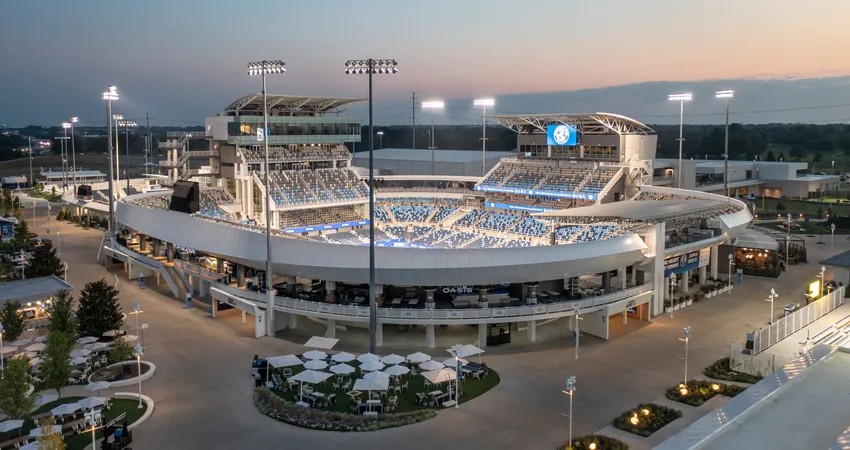
Center Court at the Lindner Family Tennis Center was opened in 1981. It is initially called the ATP Stadium with a seating capacity of 7,300. Ongoing renovations to the stadium in the 1980s added new amenities for players, officials, and media, and increased the capacity to 10,500. In 1997, after reconstruction, the main stadium was renamed Center Court to highlight its position at the center of the row of stadiums. In 2025, after a massive $260-million renovation, the stadium underwent numerous high-tech upgrades for players and visitors, and its seating capacity increased to 12,000. Also, the court was equipped with hard Har-Tru surfaces in a new blue color.
Center Court Seating Map at the Lindner Family Tennis Center
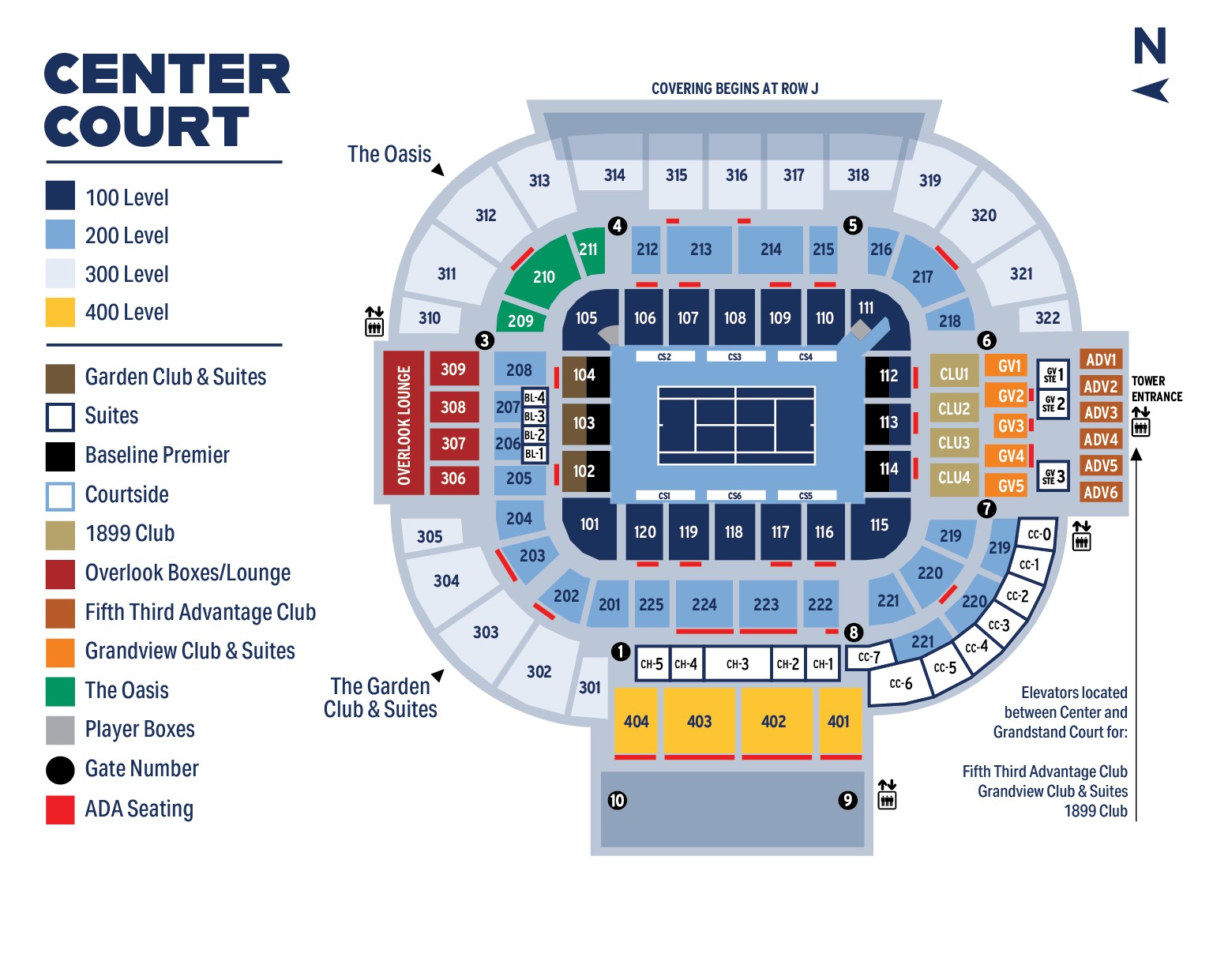
Center Court at the Lindner Family Tennis Center offers two seating options: premium and reserved stadium seating.
Premium Seating, including:
- 100-level Seats. The lowest rows surround the court along the east, west, and south sides.
- Overlook Box Seats. Seats are located directly behind the North Baseline, considered some of the best for watching tennis due to their perspective.
- The Oasis. The exclusive premium outdoor recreation area.
- 1899 Club. One of the most exclusive seating areas. Spectators are accommodated in covered, air-conditioned rooms, with soft armchairs and retractable tables for eating. Guests can also watch the match on the Grandstand through a large viewing window.
- Grandview Club. A premium area that provides one of the best views of the court from above and a panoramic view of the adjacent Grandstand Court.
- Fifth Third Advantage Club. Club seats are located on the 4th floor of The Tower. The ticket price includes all-inclusive meals and other services.
Reserved Stadium Seating, including Level 200 (Loge Seats), Level 300 (Terrace Seats) and Level 400 (Pavilion Seats), and offers different categories of service from premium to budget.
Grandstand Court at the Lindner Family Tennis Center
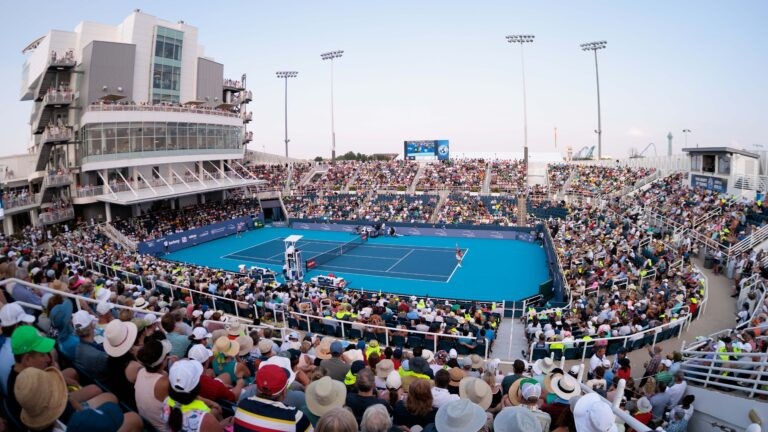
In 1995, the Grandstand Court, located very next to Center Court, was completely renovated. Concrete and modern seating replace the wooden temporary structures. That year, it represented a scaled-down replica of Center Court and could accommodate 5,000 spectators, significantly increasing overall tournament attendance. Lighting was later added, enabling night sessions on both courts. In 2025, after a multi-million-dollar renovation, a unified facade was created for Center Court and the Grandstand Court, behind which a common structure and a connecting pedestrian walkway physically connect the two main stadiums.
Grandstand Court Seating Map at the Lindner Family Tennis Center
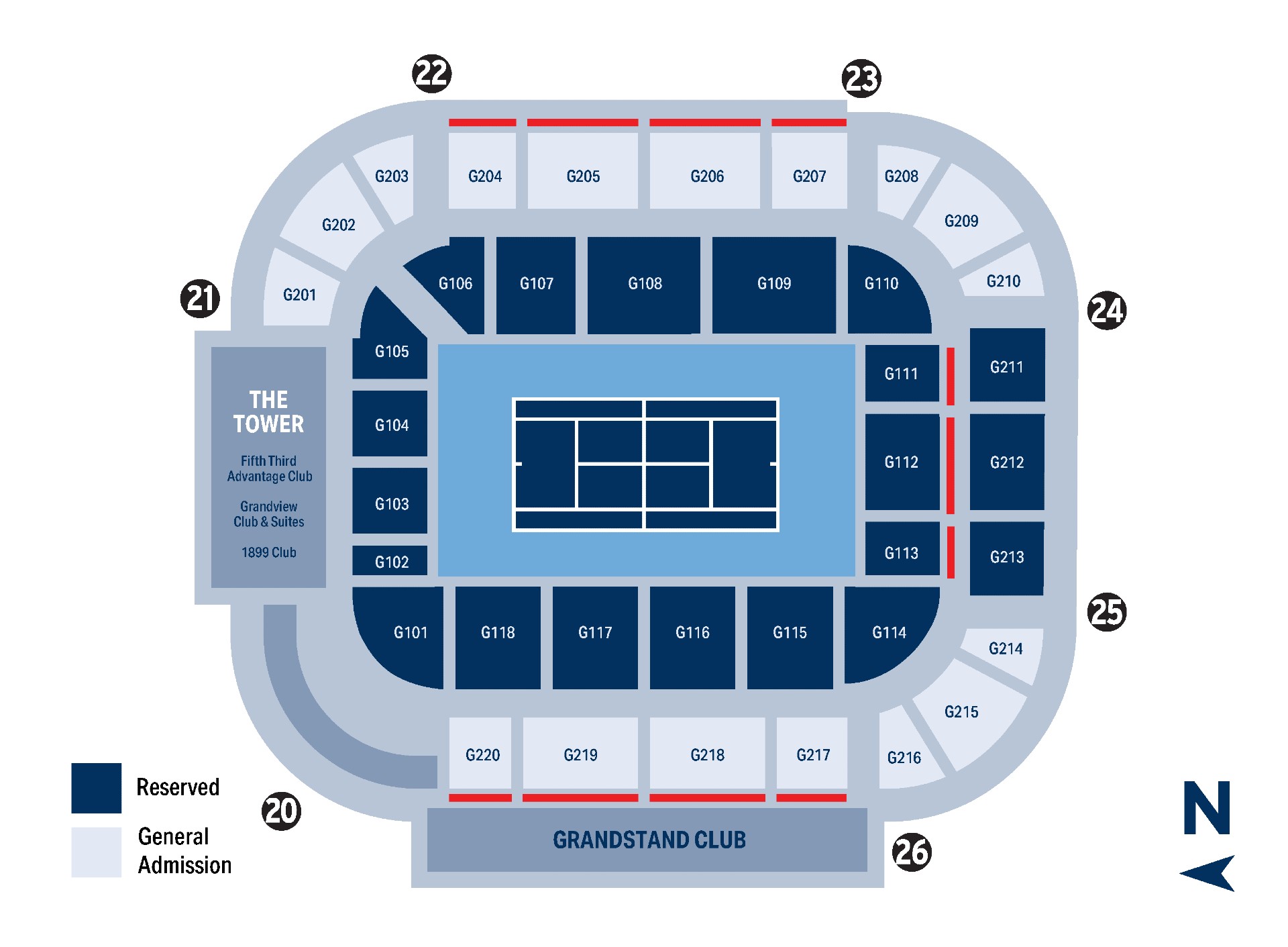
The seating arrangement of the Grandstand Court at the Lindner Family Tennis Center is divided into a lower tier with reserved seats and an upper tier, where a general admission system is often in operation.
Lower Level, including sections that surround the court. These seats require a separate ticket for access.
Upper Level, located higher and providing a panoramic view. Most seats in the upper tier of the Grandstand Court are free for visitors with any tournament-area entrance ticket.
Grandstand Club, located along the West Sideline, is a premium area combines outdoor seating with access to indoor facilities.
The Tower, a structure that links this court to the main Center Court with access to reserved seating and premium services.