 SLAM HISTORY
ALL TIME Rome VENUES
Foro Italico, Rome: 1969 - present
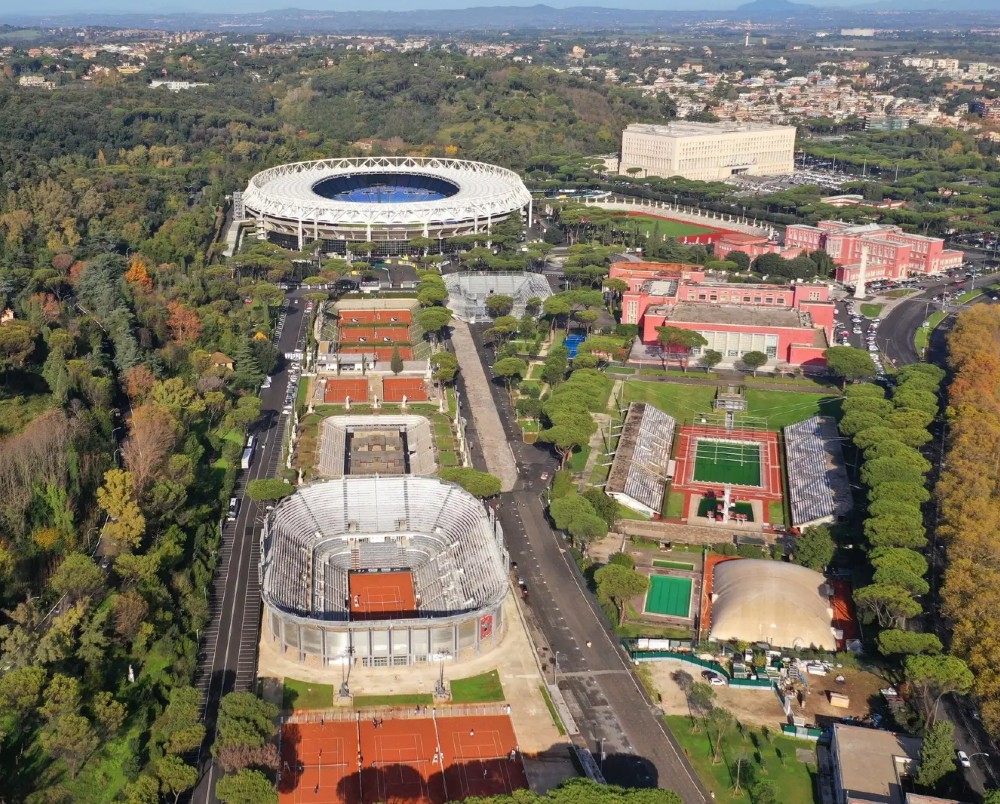
The famous Foro Italico, a majestic and monumental sports complex near Monte Mario hill, was built in 1928-1932 during the dark years of Mussolini's rule. It was intended to promote the dictator's regime. After the war, when light triumphed over darkness, Italians chose not to destroy their historical heritage and made the complex their calling card for the 1960 Olympic Games. Since 1935, a tennis tournament has been held at the Foro Italico grounds from time to time, gaining the most popularity with the advent of the Open Era in 1969. At the time, John NEWCOMBE and Julie HELDMAN won the first Open titles. The tournament in Rome holds a special place in the world calendar. It is not just about a competition for athletes or a comfort for spectators. It is about an incredible atmosphere, permeated with history, charm, fashion, style and food. Marble sculptures and stone seats in the arenas, stylized during the heyday of the Roman Empire, add a touch of exquisite antiquity and fill visitors' mobile phones with numerous images. The famous umbrella pines cast a wide shadow and form a recognizable silhouette of the Roman landscape. Both cypresses and pines in the Foro Italico create a picturesque green landscape and complement the white marble architecture of the stadiums and alleys of the 1930s.
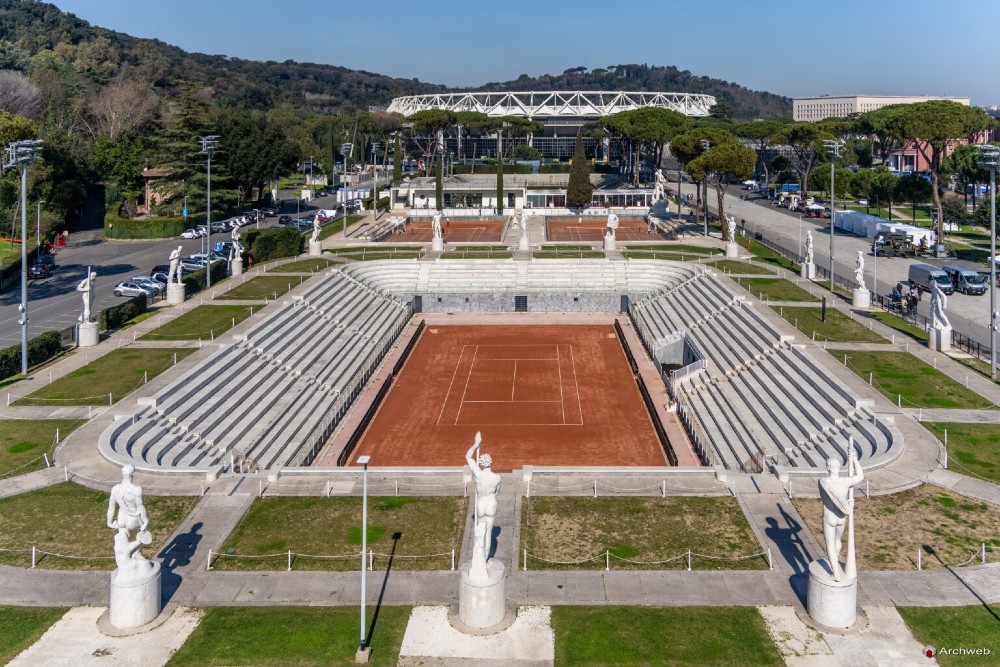
Until the 1990s, the main court for the international tournament in Rome was the iconic Stadio della Pallacorda, built in the 1930s. It is one of the world's most beautiful and authentic tennis stadiums. Because of the arena's sunken shape, the upper rows of seats are at the level of the sports complex's usual pedestrian walkways, and spectators descend to the court from above. The stands and seats are made entirely of white Carrara marble and resemble classic antique steps. The arena is surrounded by 18 marble statues of athletes, which add incredible charm while watching the matches. The stadium seats about 3,500 to 4,000. In 2006, the stadium received its current name in honor of Nicola PIETRANGELI, a two-time Roland Garros champion and a legend of Italian sports.
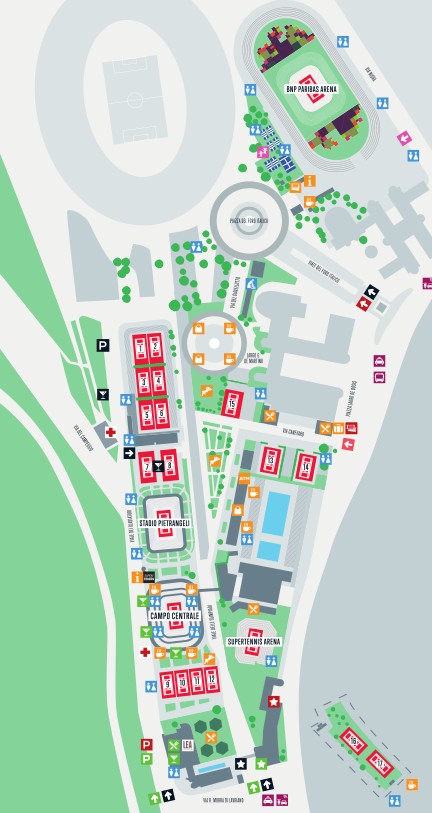
Foro Italico Grounds Map
Central Court at Foro Italico, Rome
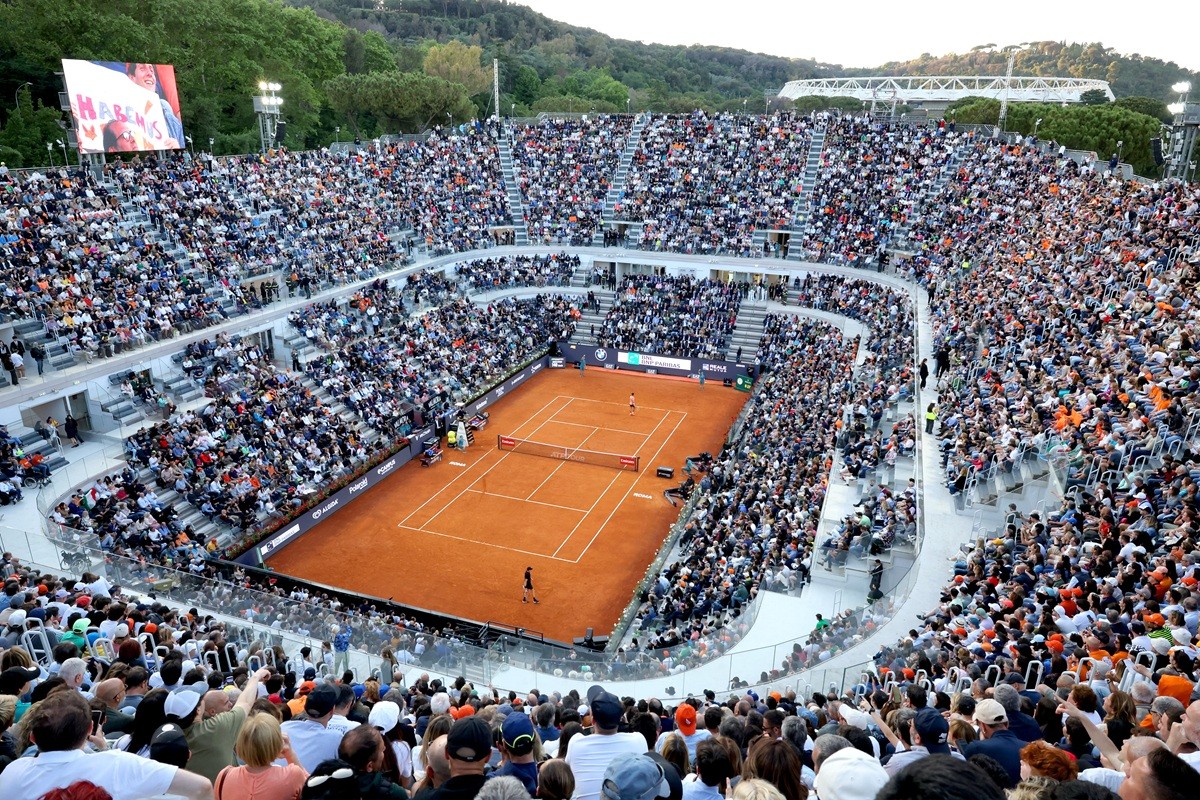
In the 1990s, the picturesque Stadio della Pallacorda court could no longer accommodate everyone, so a temporary wooden structure with 6,000 seats replaced it and became the tournament's official Campo Centrale. In 2010, the tournament's main arena became the new Center Court (Stadio Centrale del Tennis or Campo Centrale), built to harmonize with the landscape and historical architecture of the Foro Italico. The arena seats 10,400 spectators and is one of the world's largest clay stadiums. The Roman public is known for its emotionality. Thanks to the deep bowl of the stadium and the filled stands during top matches, an incredible sound effect of the "Roman Colosseum" is created, similar to football noise accompaniment.
Central Court Seating Map at Foro Italico, Rome
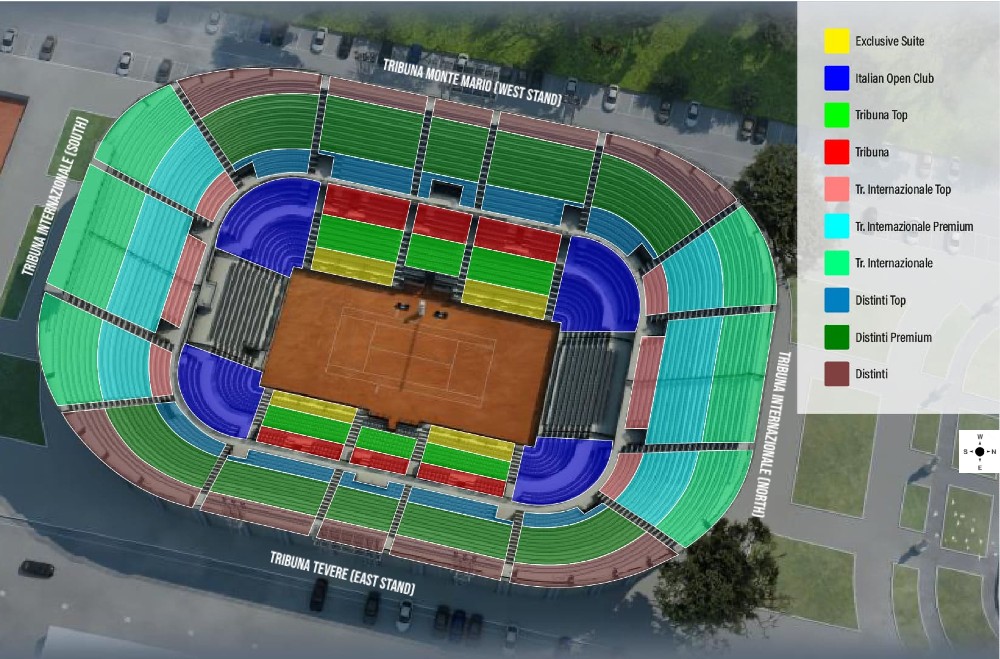
Exclusive Suite. Premium category of corporate and VIP hospitality, which is integrated into the Lower Tier of the Monte Mario and Tevere stands. The boxes occupy the 1st and 2nd rows directly next to the court. Each suite accommodates 7 people.
Italian Open Club. Seats in this premium category are located in the corner sectors. In addition to a great view, ticket holders get access to premium services.
Tribuna Top. Located on the Lower Tier, just behind the elite Exclusive Suites, this ticket offers a great sideline view of the game. This category also gives you free, first-come, first-served access to the outer courts of the Foro Italico complex.
Tribuna. Provides a panoramic, clear view of the entire venue at more affordable prices than the lower tier.
Tribuna Internazionale Top. Located on and directly behind the baselines in the Internazionale Nord and Internazionale Sud sectors. The prefix Top means you will be sitting in the lower rows of the upper tier.
Tribuna Internazionale Premium. Located in the stadium's Internazionale Tribuna, above the category Top seats, they offer an excellent view at a more moderate price.
Tribuna Internazionale. The highest seats in the stands of Internazionale Nord and Internazionale Sud.
Destini Top/Destini Premium/Destini. The seats are similarly classified to Internazionale, but in the Monte Mario (West) and Tevere (East) sideline stands.
BNP Paribas Arena at Foro Italico, Rome
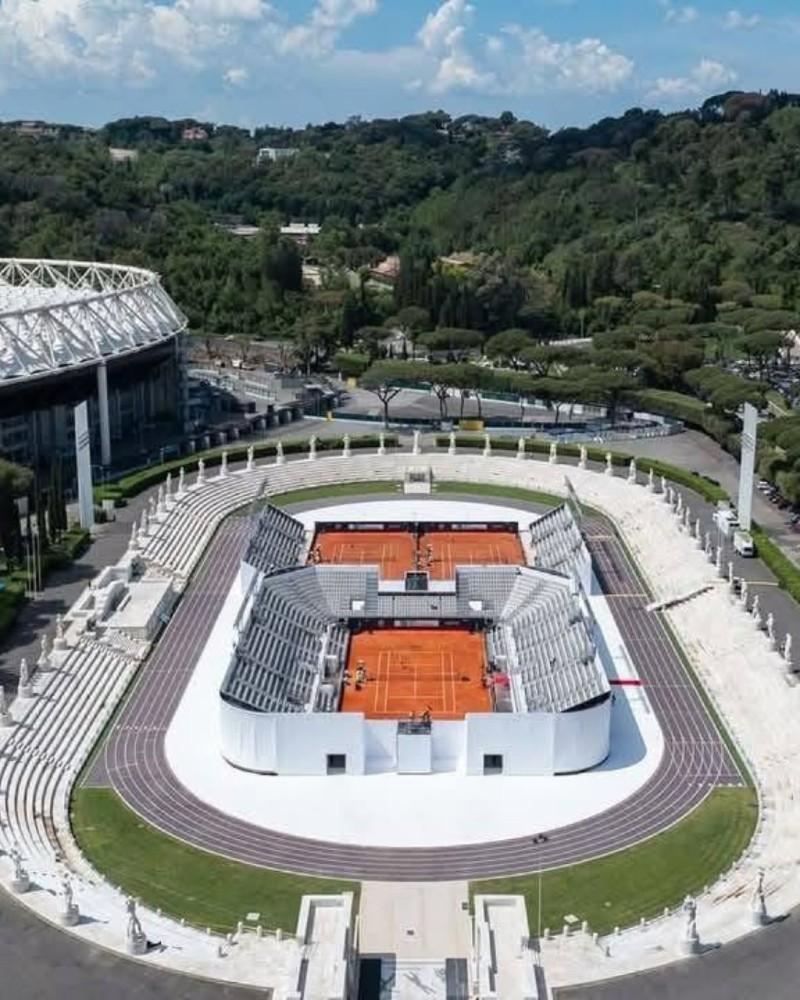
In 2012, the second-largest tennis stadium, the SuperTennis Arena, opened within the Foro Italico sports complex. It sits directly next to the complex's main stadium, the Stadio Centrale, which has hosted some of the world's most important sporting events and is also the home arena of the football clubs Roma and Lazio. In 2018, the stadium was renamed the Next Gen Arena, and then in 2019 it was renamed the Grand Stand Arena. In 2026, the organizers decided to make a large-scale redesign of the Foro Italico sports complex, and the arena was completely rebuilt and integrated into the Stadio dei Marmi running track center. The boldness and uniqueness of this architectural solution is admirable. The Stadio dei Marmi, or Marble Stadium, is a historic open-air amphitheater from 1932, which is located 5 meters below ground level. Its main feature is 60 monumental four-meter statues made of Carrara marble, depicting various sports disciplines and produced in different regions of Italy. Previously, the stadium hosted qualifying competitions and athletes' warm-ups. Today, on ordinary days, the stadium functions as a free public training track. The renovated court, now called BNP Paribas Arena, seats more than 7,000 spectators who watch matches in an amazing atmosphere surrounded by antique-style marble sculptures.
Because of the large-scale changes, seating plan and stand categories must be approved and made publicly available later.