 SLAM HISTORY
ALL TIME Madrid VENUES
Madrid Arena in Casa de Campo: 2002-2008
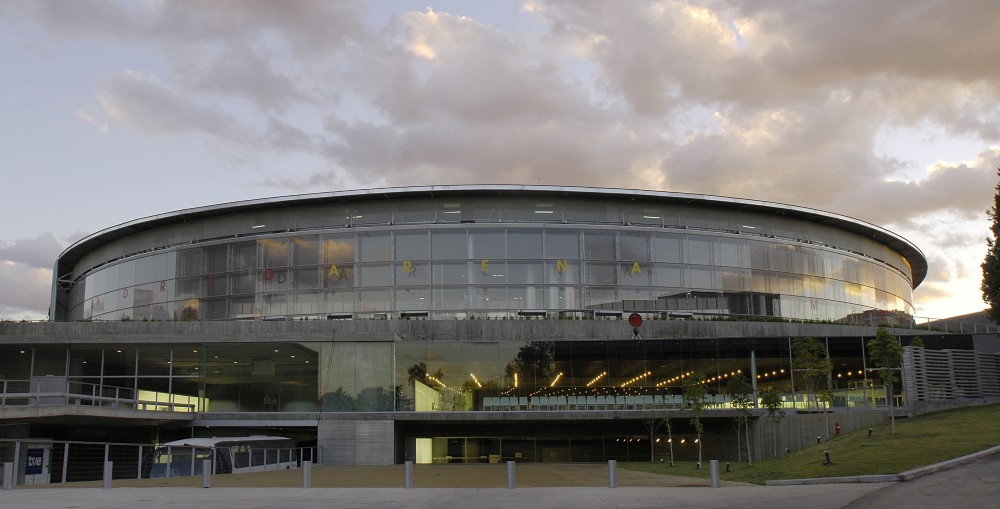
In 2002, a new multi-purpose complex, the Madrid Arena, was built in the Casa de Campo park complex in a futuristic steel-and-glass style, and it was included in Madrid's bid to host the 2012 Olympic Games. London won the Olympic bid, but Madrid didn't lose. The new complex became home to the prestigious tennis tournament from 2002 to 2008. The competition was held on an indoor hard court, and the main court had a capacity of around 10,500–12,000 seats depending on the location of the retractable stands. The competition was open only to men, and the first winner was the legendary American tennis player Andre AGASSI.
Caja Magica, Madrid: 2009-present
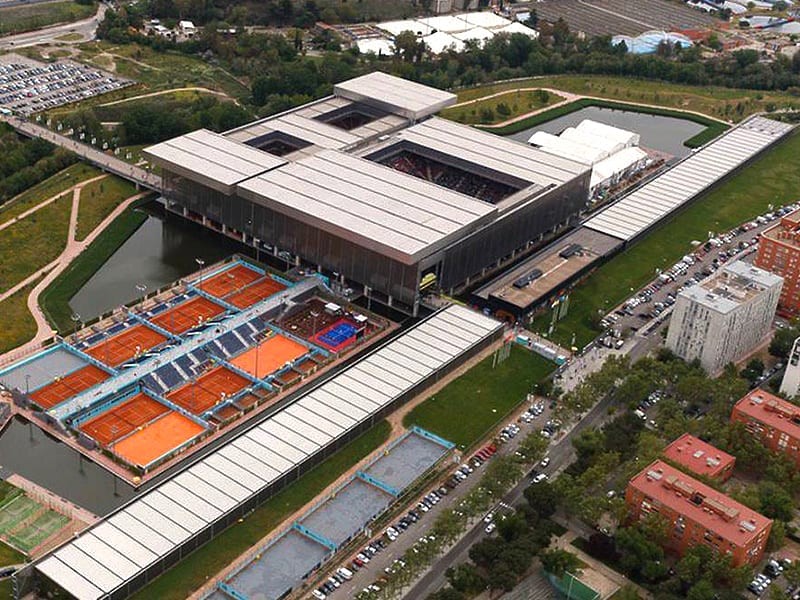
In 2009, the tournament underwent a radical change. The move to the newly built multi-purpose sports complex Caja Mágica changed the format of the Madrid tournament. Clay as the court surface and the change from autumn to spring organically implemented the event into the traditional spring clay season. In 2009, women joined the men's competition and Dinara SAFINA won the first title. The Caja Mágica building itself, or the Magic Box, is made of steel, wood and glass. From the outside, it looks like a strict, closed cube and has three main courts: Manolo Santana Stadium, Arantxa Sanchez Vicario Stadium and Stadium 3. Each of them is equipped with a separate sliding roof. This allows you to turn the open courts into closed ones in just a few minutes in case of rain or heat. Since Madrid is located at an altitude of almost 700 m above sea level, this creates the effect of a fast court, unlike other clay surfaces. The scandalous blue clay in 2012, which was tried to be implemented for a better television picture, did not take root and the tournament returned to the traditional red clay.
Manolo Santana Stadium, Madrid
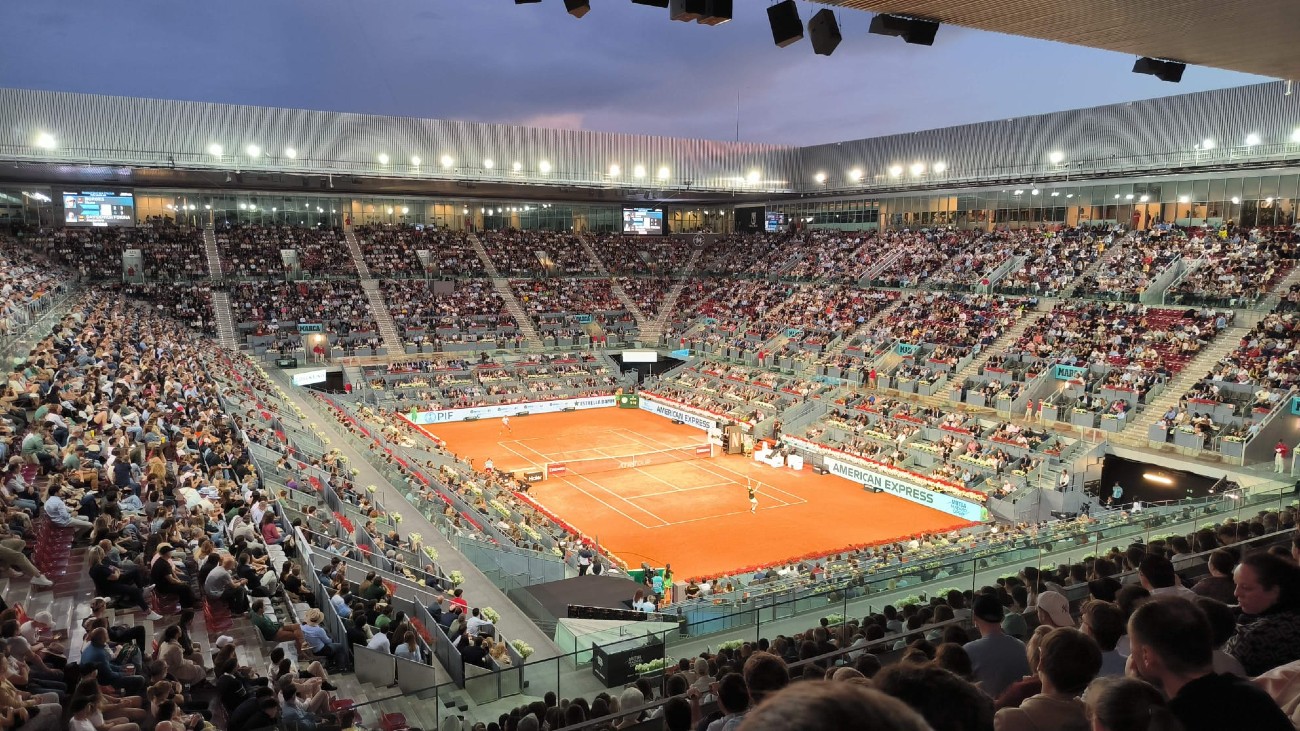
The Manolo Santana Stadium (Estadio Manolo Santana) is the main court of the tournament, named after the legendary Spanish tennis player Manuel SANTANA, who was the first tennis player from Spain to win Wimbledon in 1966. The court has a capacity of 12,442 spectators and has a traditional red clay surface. The architects of the Caja Mágica designed the court in such a way that the stands have a steep angle of inclination. This provides clear sightlines of the court lines from any point, minimizing "blind spots". Since 2025, the tournament has introduced Electronic Line Calling, which allows organizers to abandon the line umpires completely. Despite the existing controversial views on the feasibility of such a system for clay courts, Madrid became one of the first to introduce this technology.
Manolo Santana Stadium Seating Map, Madrid
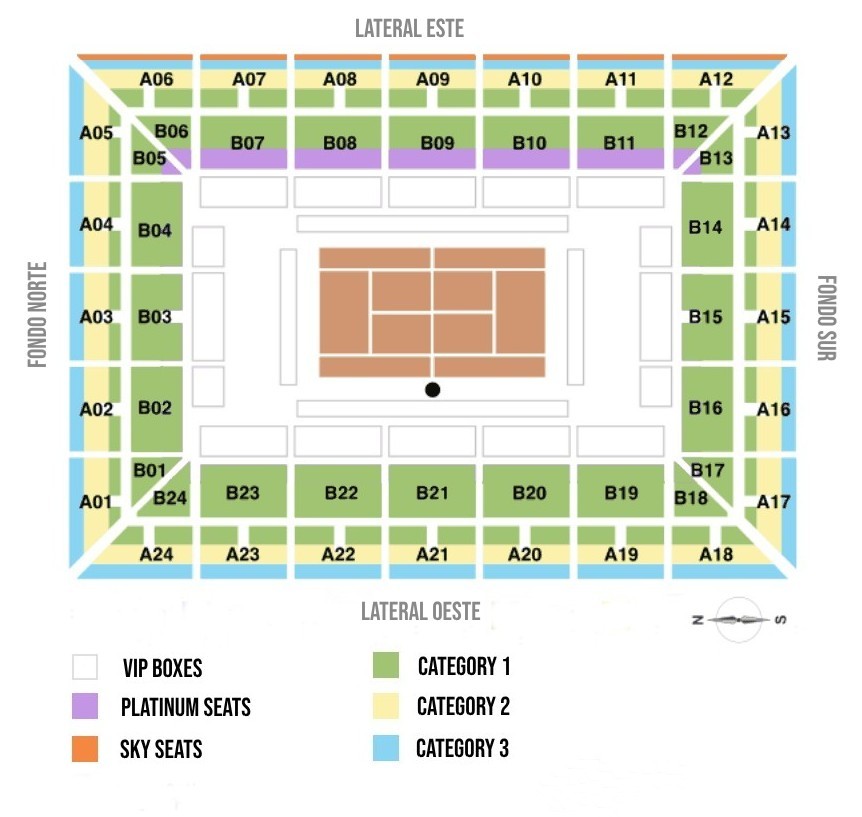
VIP Boxes / Palcos. The lowest rows are immediately around the tennis court. They are divided into sectors according to the cardinal directions: Lateral Oeste (West), Lateral Este (East), Fondo Norte (North), and Fondo Sur (South). The boxes on the lateral lines (Lateral) are considered the most prestigious. Visitors have premium access to closed recreation areas and VIP haute cuisine restaurants (VIP Club)
Platinum Seats. Located in the first two rows directly above the courtside boxes, this area occupies the East side of the stadium along the sideline. It is very small and intimate, providing low spectator density and a high level of privacy. Ticket holders receive special wristbands for access to the exclusive VIP Platinum Lounge. The price includes elite catering and a free bar.
Sky Seats. Premium VIP seating is located on the highest level of the stadium, directly in the last two rows of Category 3. These seats are located in the east stand of the court. They provide a panoramic view of the entire court from above. Tickets provide access to the premium Sky Lounge, with an area of 230 sq m, intended for buffets, restaurant service, and business meetings while watching live matches.
Category 1. Some of the most prestigious and closest to the tennis court are located on the lower tier. They provide excellent visibility because of their proximity to the players.
Category 2. The seats are located at the top of the arena and provide the occupants with a good overall view of the central tennis court.
Category 3. Located in the highest rows of the upper tier, providing flower lovers with a general view at the most affordable price.
Arantxa Sanchez Vicario Stadium, Madrid
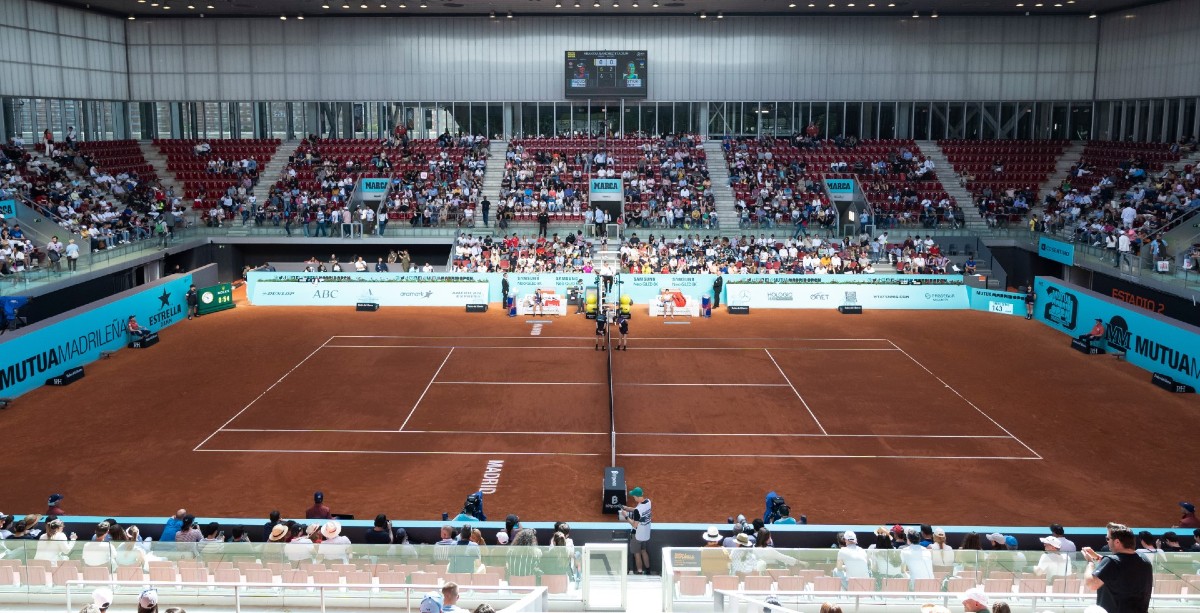
Arantxa Sanchez Vicario Stadium is the second-largest tennis venue in Madrid, part of the Caja Mágica sports complex, and has a capacity of approximately 3,500 spectators. The arena is named after the legendary Spanish tennis player, former world number one Arantxa SANCHEZ VICARIO, who was present at the opening in 2009. The court uses the same technologies as the main arena of the complex, namely a retractable roof and Electronic Line Calling. The court has steep stands and a compact bowl, which creates an atmosphere of intimacy and a feeling of complete immersion and play.
Arantxa Sanchez Vicario Stadium Seating Map, Madrid
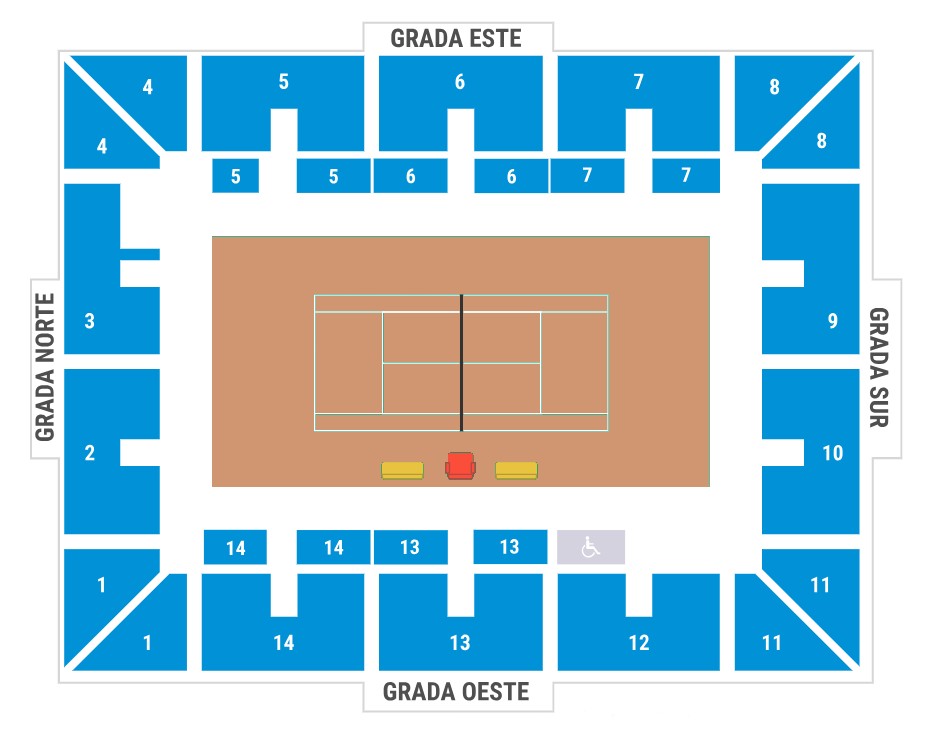
Unlike the main stadium, where seats are clearly divided into classic categories and VIP boxes, Stadium 2 has a much simpler ticket structure.
Boxes. The lower tier, located closest to the court, is reserved for sponsor boxes and VIP seats.
Reserved Seating. These tickets are sold separately for specific tournament days and guarantee a reserved seat in the arena stands for either a day or evening session. They are priced significantly more affordably than the main arena tickets.
General Admission. On days when the arena's matches don't require a separate reservation, access is open to holders of a Grounds Pass or visitors with a Manolo Santana Stadium ticket. Seating is on a first-come, first-served basis.